

Incoming mission / St. Louis
Click the envelope to open your letter.
Dear Mission Designer,
St. Louis needs your eyes in space.
Spot flash-flooded St. Louis streets after record overnight rain and guide rescuers fast.
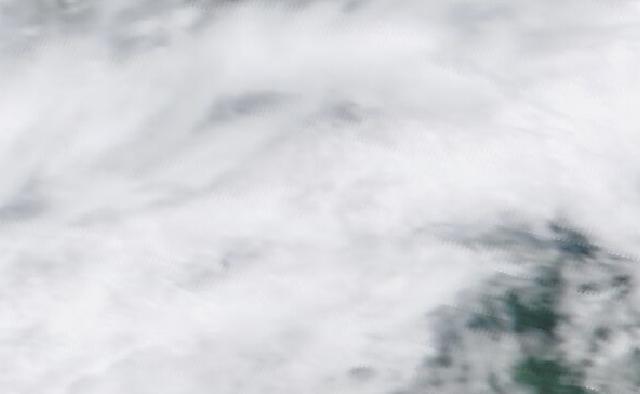
Clouds cover parts of the flooded area. We need your first useful observations within 10 hours.
— St. Louis research team
Fictional educational mission request
Open the full flight brief and science sources
Mission control / priority uplink
● ACTIVE TRAINING SCENARIO
Flash flood alert: St. Louis
This training scenario replays the July 26, 2022 flash flood, when St. Louis got a record amount of rain in one night.
Why space? Clouds cover parts of the flooded area. Your spacecraft must find useful observations and transmit them to the ground team.
Archived NASA imagery · not a live emergency · source & date ↗
Mission science, assumptions & data sources
What the mission models
Find the flooded areas through the clouds and get the map to rescuers within 10 hours.
Storm clouds still cover the city after the downpour.
Results come from the deterministic simulation. Surface temperature is different from air temperature, and radar does not directly measure surface heat.
Source provenance
- NASA GPM IMERG daily precipitation (via NASA GIBS) · NASA-observed reference · Observed rainfall, 25-28 Jul 2022 (26 July 2022 St. Louis flash flood). Flood cells are a heavy-rain PROXY, not mapped flood water: the wettest 35% of populated cells by IMERG event total (at least 131 mm). eventDay is the day a cell's cumulative IMERG rain first reached half its event total (mission day 0 = 2022-07-26; earlier lead-in rain counts as day 0).
- NASA SEDAC Gridded Population of the World v4, 2020 density (via NASA GIBS) · NASA-observed reference · Cells with at least 500 people per square kilometre count as populated neighbourhoods.
- NASA MODIS NRT Global Flood Product, 2-day composite (via NASA GIBS) · NASA-observed reference · Checked for observed flood water but no usable flood pixels were recorded. Checks: 2022-07-25 77% no-data, 0.0% flood; 2022-07-26 100% no-data, 0.0% flood; 2022-07-27 100% no-data, 0.0% flood; 2022-07-28 100% no-data, 0.0% flood.
- Cloud cover and sensor detectability (educational model) · Educational model · Not observed: per-cell cloud probability is a model (storm-cloud base, higher where IMERG rain was heavier) and detectability is a seeded model. The heavy-rain-to-flood rule is also a simplification.