

Incoming mission / Salt Lake City
Click the envelope to open your letter.
Dear Mission Designer,
Salt Lake City needs your eyes in space.
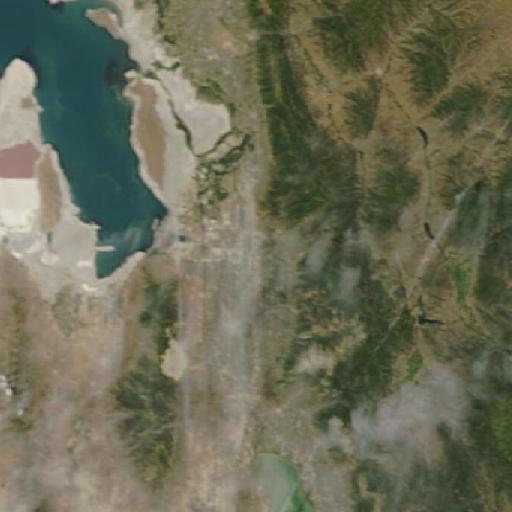
Find the driest ground around the shrinking Great Salt Lake during the July 2022 drought.
Choose how to observe the mission area from space. We need your first useful observations within 72 hours.
— Salt Lake City research team
Fictional educational mission request
Open the full flight brief and science sources
Mission control / priority uplink
● ACTIVE TRAINING SCENARIO
Drought alert: Salt Lake City
This training scenario replays July 2022, when the Great Salt Lake shrank to its lowest level ever recorded.
Why space? Choose how to observe the mission area from space. Your spacecraft must find useful observations and transmit them to the ground team.
Archived NASA imagery · not a live emergency · source & date ↗
Mission science, assumptions & data sources
What the mission models
Find the driest ground accurately and report it to water managers within 72 hours.
The sky is almost always clear, but dry soil and wet soil look alike to an ordinary camera.
Results come from the deterministic simulation. Surface temperature is different from air temperature, and radar does not directly measure surface heat.
Source provenance
- NASA SMAP L4 analyzed root-zone soil moisture (GIBS layer SMAP_L4_Analyzed_Root_Zone_Soil_Moisture) · NASA-observed reference · Hazard cells = driest 18% of SMAP L4 root-zone soil moisture on 2022-07-25 during the summer 2022 drought, when the Great Salt Lake hit a record low; lake / no-data cells are not hazards. eventDay = first day (from 2022-07-19) a cell reached that dryness. SMAP L4 is a model analysis that assimilates SMAP satellite observations. The hazard cut-off is a game choice.
- Mission: Possible cloud and detectability model · Educational model · cloudProbability (baseline 0.1 for this drought setting) and detectability are seeded educational estimates, not observations.